
Why Builders Ask for Construction Staking Before Clearing the Lot
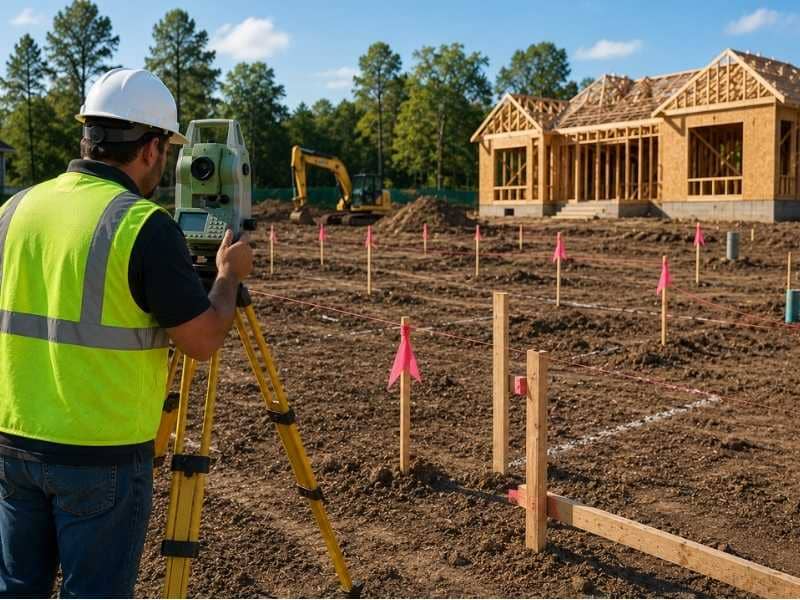
Before a single tree comes down, many builders order a construction staking survey. It can seem early to call in a surveyor while the lot is still rough and overgrown. The timing is the whole point. Staking puts the approved plan onto the real ground, so the crew knows where everything goes before they clear and dig. Skip that step, and a cleared lot turns into a guessing game. Get it right, and the build starts on solid footing.
What Construction Staking Marks on a Site
Construction staking is the job of placing wooden stakes and markers that show where built features belong. Each stake stands for a point from the project plans. Put together, the stakes map the building, not just the land.
A surveyor sets stakes for things like building corners, driveways, parking areas and utility lines. Many markers also show grading heights, which tell the crew how high or low to bring the dirt. With the stakes in place, every trade can read the plan at full size, right where the work will happen. That shared picture is what keeps separate crews working toward the same result.
Why Builders Want It Before the Lot Is Cleared
Clearing changes a lot fast. Crews cut down trees, haul off brush and reshape the surface within hours. Once the ground is bare, it gets much harder to tell where the plan lines up. Staking first locks the plan to the site while the natural reference points still exist.
There’s a money reason too. A cleared and graded lot stands for real hours and real fuel. If a crew clears the wrong areas or grades to the wrong heights, they have to redo that work. Staking ahead of time keeps the first pass on target, so the heavy machines move dirt once instead of twice.
What the Surveyor Works From
Staking doesn’t come from a surveyor’s read on the land. It comes straight from the approved design. The site plan, the grading plan and the engineering drawings spell out exact positions and heights.
The surveyor turns those numbers into points on the ground. They tie each stake back to known reference points, so the layout matches the plan closely. If the design says a wall sits a set distance from the line at a set height, the stake marks that exact spot. The plan leads, and the stakes follow.
What Goes Wrong When Staking Comes Too Late
Builders who clear first and stake later often pay for it. A lot cleared without a layout can come out too wide, which wastes trees and money. It can also come out too narrow, which forces a second round of machine work.
Grading mistakes cost even more. When the dirt goes in at the wrong height, drainage can fail and a foundation can sit wrong. Fixing a bad grade means hauling material back in or cutting it out again. Late staking turns small layout questions into pricey corrections, and it can push the whole schedule back.
Where Staking Fits in the Build Schedule
Staking lands in a specific window. It happens once the design has its approvals and the surveyor confirms the boundary, but before clearing and earthwork begin. That order hands the crew a clear map before crews disturb any ground.
On many projects, the surveyor returns more than once. The first round guides clearing and rough grading. Later rounds mark foundations, utilities and final features as the build moves ahead. Each visit keeps the work tied to the same approved plan from start to finish.
Frequently Asked Questions
What is a construction staking survey?
It’s survey work that marks where a project’s planned features will sit on the ground. A surveyor places stakes for items like building corners, roads and utilities. Those stakes turn a paper design into a full-size guide the crew can follow.
When does construction staking happen on a project?
It usually comes after the plans clear approval and before any clearing starts. Some staking also happens later, as crews reach foundation and utility work. Setting it early gives everyone a layout before the ground changes.
What does construction staking show on the ground?
The stakes carry two kinds of information. They mark where built features belong, and many mark grading heights that tell crews how far to cut or fill. So the crew learns both the position and the level of the work.
Is construction staking the same as a boundary survey?
No, they answer different questions. A boundary survey finds the legal edges of a property. Construction staking takes an approved design and marks where the new work belongs inside those edges.
Why do construction stakes sometimes need to be replaced?
Heavy equipment, weather and foot traffic can knock stakes loose or bury them. A missing stake leaves a hole in the layout the crew depends on. Surveyors come back to reset those points, so the plan stays accurate through each phase.