
The Boundary Survey Issue That Shows Up After a Fence Is Already Built
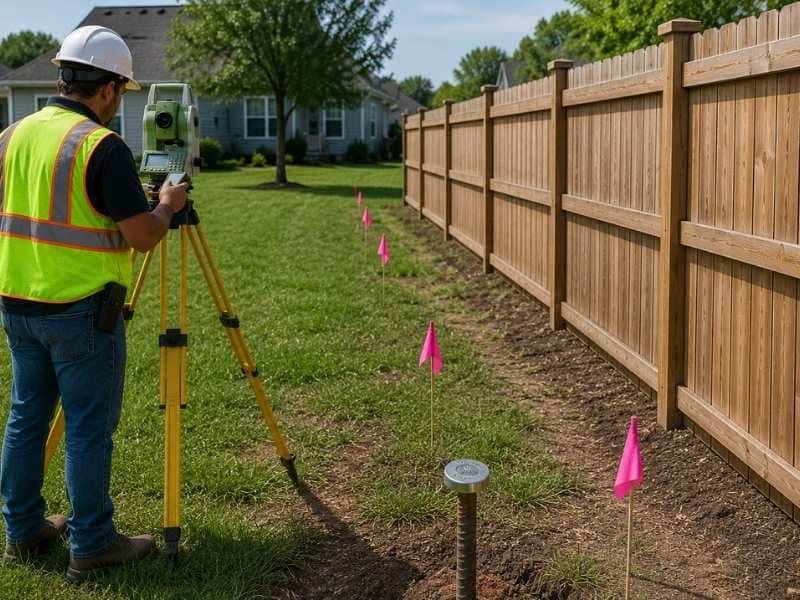
A boundary survey marks the exact legal edges of a property. Many fences go up before anyone checks that line, and the gap only shows up later. The fence looks fine at first. Then a survey or a question from a neighbor reveals that it sits a few feet off. By that point the posts are set in concrete, so any correction takes time and money. Knowing how this happens makes the whole thing easier to avoid.
Why Fence Problems Happen After It Is Already Built
Most fence problems trace back to one habit. Crews build to a guess instead of a surveyed line. Homeowners often point to an old fence, a tree or the curb and assume the boundary runs there. None of those features actually mark a legal line.
Real property lines come from recorded deeds and from markers a surveyor sets in the ground. A fence built on a rough guess can sit a few feet inside or outside the true line. The mistake usually stays hidden for years. It surfaces when the property sells, when a permit gets pulled, or when a neighbor starts a project of their own.
Signs Your Fence May Be in the Wrong Place
A misplaced fence rarely announces itself. Even so, a handful of signs suggest the line and the fence don’t agree. Any of them is worth a closer look.
- A neighbor asks why the fence sits where it does
- Metal pins or stakes in the ground don’t line up with the fence
- An older survey shows the boundary in a different place
- The fence cuts across a driveway, garden or shed at an odd angle
- A new neighbor’s survey marks a line you didn’t expect
Some of these turn out to be nothing. Others point to a fence that strayed onto the wrong side. Spotting the issue early keeps a small fix from growing into a costly one.
How a Boundary Survey Finds the Real Property Line
A surveyor relies on records and field measurements, not guesswork. The process moves in a clear order, and each step builds on the one before it.
First comes the paperwork. The surveyor reads the deed and the recorded plat, which describe the land in measurements and reference points. Next comes the fieldwork. The surveyor searches the site for markers such as metal pins, concrete monuments or stamped disks left by earlier surveys. After locating a few, they measure from those points with precise instruments and compare the ground to the records. When the two match, the line is confirmed. When they conflict, the surveyor weighs the evidence, settles on the correct boundary, and marks it so the limits are clear.
What to Do If a Fence Is Over the Property Line
Finding out that a fence crosses the line feels stressful, yet the problem has straightforward solutions. The first move is a calm conversation with the neighbor. Most people would rather settle the matter together than turn it into a dispute.
After that talk, a few paths open up. Moving the fence back to the true line is the cleanest option. The neighbors can also sign a written agreement that lets the fence stay where it is. In some cases, one owner buys or trades the narrow strip of land so the records match what sits on the ground. A surveyor, and sometimes a lawyer, can help weigh the choices. Timing matters too, because a fence left in the wrong place for years can create legal rights that complicate any later fix.
How a Boundary Survey Helps Before a Fence Goes Up
A survey done before construction takes the guesswork out completely. With the true line staked, the crew sets each post in the right place from the start. There’s nothing to undo afterward and nothing to dispute with the people next door.
The order of events is what makes the difference. A line confirmed on paper and in the field gives everyone a shared reference before any digging begins. That same record clears up questions fast if the property later changes hands. The work happens once, and it holds.
Frequently Asked Questions
What is a boundary survey?
It’s a measured study by a licensed surveyor that pins down the legal corners and edges of a parcel. The surveyor combines recorded documents with markers found on site. The finished drawing shows exactly where a property begins and ends.
Do I need a boundary survey before building a fence?
No law requires one in most places, but it’s the safer choice. A confirmed line keeps the fence clear of a neighbor’s land and free of future arguments. The cost is small next to relocating a fence that’s already standing.
Can a fence be built on the wrong property line?
Yes, and it happens more often than people expect. Without a survey to guide them, crews follow whatever looks correct that day. A spot that looks right on the surface can still sit well off the recorded boundary.
What happens if my fence is on my neighbor’s property?
Usually you either move it back or reach a written agreement that lets it remain. Some neighbors sell or swap the small strip of land to settle things for good. Acting quickly helps, since a long-standing encroachment can harden into legal rights.
How long does a boundary survey take?
Fieldwork on a typical home lot often wraps within a day or two. The full report can take one to three weeks once research and drafting are finished. Larger or more complicated parcels usually need additional time.