
What Happens When You Skip a Construction Surveyor?
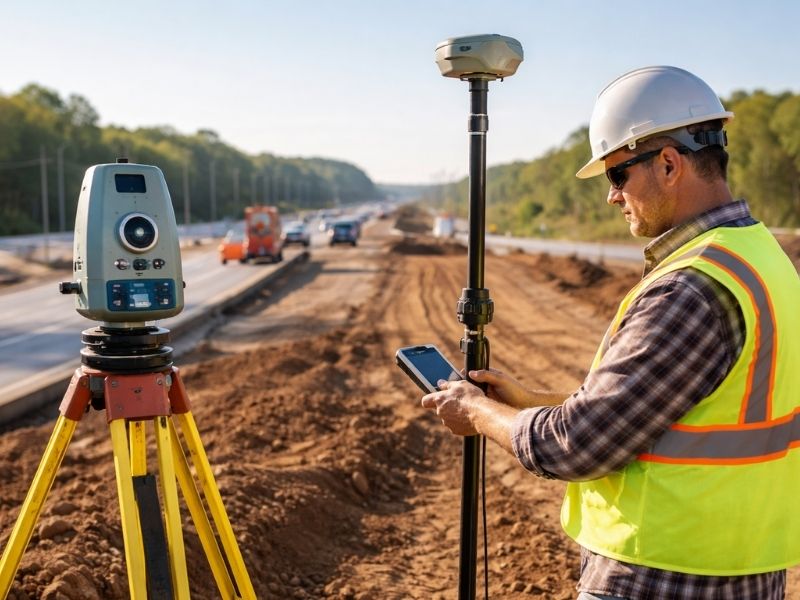
Skipping a construction surveyor feels like a way to save time and cut costs. It’s not. What it actually does is push the cost further down the timeline, where fixing mistakes is far more expensive. Developers who skip this step don’t avoid problems. They just find out about them later, when the damage is already done.
This article covers what goes wrong, how bad it gets and what it costs when a construction surveyor isn’t part of the project from the start.
What a Construction Surveyor Controls on a Project
Before getting into what goes wrong, it helps to understand what a construction surveyor actually does.
A construction surveyor sets the physical reference points that crews work from. They mark where buildings sit on the lot, where utilities go underground and where grading targets need to hit. Every crew on the site works from those marks.
Without that baseline, crews work from plans alone. Plans drawn in an office don’t account for what’s actually on the ground. That gap is where mistakes happen.
What Goes Wrong Without a Construction Surveyor
Structures Built in the Wrong Location
This is the most expensive mistake a developer can make. A building placed even a few feet outside the approved area can trigger a stop-work order, a forced demolition or a variance process with the local permit office.
Setback violations are the most common version of this problem. Every parcel has minimum distances between structures and property lines. Those distances come from zoning rules and recorded easements. A crew without survey control may estimate those setbacks from a plan drawing. Estimates are not measurements. The difference can be the difference between getting your occupancy permit and getting a tear-down order.
Grading and Drainage Failures
Earthwork without survey control produces sites that don’t drain correctly. A grading crew working without elevation targets is guessing at final grades. Some areas end up too low. Others are too high. Water pools where it shouldn’t.
Drainage failures show up after the first heavy rain. By then, pavement is poured and landscaping is in. Fixing the problem means tearing up finished work. In flat areas with heavy rainfall, a grading error of just a few inches can cause standing water that violates permit conditions.
Utility Conflicts and Damaged Lines
Underground utilities need to go exactly where the plans say. A water line installed two feet off its designed location may conflict with a storm drain or a foundation footing. Finding that conflict after excavation means stopping work and redesigning the installation.
In some cases, crews dig into existing utility lines because nobody verified the layout before excavation started. Utility strikes during construction are dangerous and expensive. They’re also almost always avoidable with proper survey control.
Permit Rejections and Inspection Failures
Most permit offices require survey documents at specific phases of construction. Foundation surveys, setback checks and as-built drawings are commonly required before inspections pass.
When a construction surveyor isn’t part of the project from the start, this documentation doesn’t exist. Developers scramble to get a surveyor on site after the fact, only to find that what was built doesn’t match the approved plans. The inspection fails. The permit process restarts. The closing date moves.
That sequence is entirely avoidable.
The Real Cost of Skipping Survey Control
Rework Costs More Than Prevention
Moving a poured foundation costs tens of thousands of dollars. Regrading a finished site costs more than grading it correctly the first time. Relocating underground utilities after they’re buried means digging up finished work and starting over.
Construction surveyors typically cost a small fraction of a project’s total budget. The rework costs that follow a missed survey mark can run into six figures on a mid-size commercial project.
Schedule Delays Add Up Fast
Every day a project sits idle costs money. Subcontractors move to other jobs. Material deliveries get rescheduled. Financing timelines get stressed.
A stop-work order because a structure is outside its approved area can sit for weeks while engineers and permit officers sort out a fix. Some projects never fully recover their schedule after a major setback like that.
Legal Problems From Neighboring Properties
A building that crosses a property line creates an encroachment. Encroachments trigger disputes with neighboring property owners, create title insurance problems and can block a future sale.
A developer who builds across a property line without survey control has limited options when the problem surfaces. Moving the structure is expensive. Litigation is expensive. Neither outcome is good.
When a Construction Surveyor Should Be on Site
A construction surveyor should be involved at multiple phases, not just at the start:
- Before grading begins, to set elevation control and site benchmarks
- Before foundation work, to verify building placement and setback compliance
- During utility installation, to confirm underground lines are in the correct locations
- After major phases are complete, to check that work matches the approved design
- At project closeout, to produce the as-built documents permit offices require
Treating survey control as a one-time event misses most of the value. Construction sites change constantly. Stakes get knocked over by equipment. Grade targets shift as earthwork moves forward. A construction surveyor who returns at key phases catches those changes before they become permanent.
Frequently Asked Questions
What does a construction surveyor do on a build site?
A construction surveyor sets physical reference points that crews use to place buildings, utilities and grading correctly on a site. They verify that structures are within approved setbacks, that elevations match design targets and that underground utilities are in their correct locations.
How much does a construction surveyor cost?
Costs vary by project size and scope. On most commercial projects, construction surveying runs between 0.5 and 1.5 percent of total construction costs. Either way, the cost is a small fraction of what fixing a placement error costs after the fact.
Can a contractor handle layout without a construction surveyor?
A contractor can place stakes and take measurements, but that work doesn’t carry the legal certification a licensed surveyor provides. Permit offices require certified survey documents at key inspection points. Work done without a licensed surveyor may not satisfy those requirements, which means the project can’t pass inspection.
What happens if a building is placed in the wrong location?
The outcome depends on how far off it is and what it violates. Minor setback issues may be resolved through a variance application. Structures that encroach on neighboring property or sit within an easement area may need to be physically corrected or removed. Both outcomes are expensive and avoidable with survey control from the start.
Is a construction surveyor required by law?
Requirements vary by location and project type. Most permit offices require certified survey documents at specific phases, including foundation placement and project closeout. Even where it’s not legally required at every phase, skipping it leads to failed inspections, permit rejections and rework that cost far more than the survey would have.