
Why an ALTA Survey Can Reveal More Than the Title Commitment
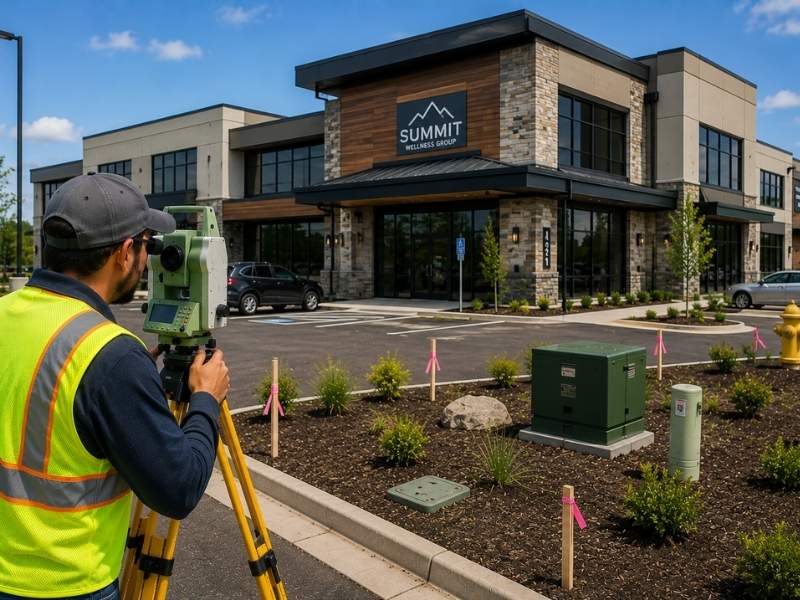
A clean title commitment can still leave a buyer surprised on closing day. The records can look perfect while something on the ground tells a different story. An ALTA survey is what catches that gap before it becomes a problem.
How an ALTA Survey Shows More Than a Title Commitment
A title commitment and an ALTA survey answer two different questions. The title commitment looks at recorded history. It checks ownership, liens and past claims tied to a property.
An ALTA survey looks at the property itself. It measures what actually sits on the land right now, regardless of what the records say. A utility easement might be recorded in one location. The actual utility line might run somewhere else entirely.
Both documents matter, but neither one replaces the other. A clean title commitment paired with an outdated survey can still miss something important. The problem sits on the ground, not in the records.
Why an Outdated ALTA Survey Can Miss Recent Property Changes
An ALTA survey reflects the property as it existed on one specific day. That’s the day someone walked the site. That date matters more than most buyers realize. A property can change in the months between a survey and a closing.
A new fence, an added parking area or a small building expansion might not show up at all. The survey may have been completed a year earlier. None of these changes show up in a title commitment either, since they are physical, not legal.
This is why timing matters as much as accuracy. A survey ordered early in a long transaction may need a fresh look before closing. That second look confirms nothing has changed since the first visit.
What Happens When an ALTA Survey Finds an Encroachment
An encroachment happens when something physically crosses a property line. A loading dock, a sign or part of a building might extend onto land that belongs to someone else. A survey is usually the first place this kind of issue gets caught.
Finding an encroachment does not always stop a deal. Sometimes it leads to a negotiated agreement between the parties. Other times it requires a structure to be modified or removed before closing can move forward.
What matters most is timing. An encroachment found early gives everyone time to work out a solution. The same issue discovered days before closing can delay the entire transaction.
Why an ALTA Survey Matters Near Growing Commercial Areas
Commercial properties near new development often face more change. Older, stable corridors tend to shift less. New roads, utility upgrades and nearby construction can all affect a parcel. The parcel itself might not have changed at all.
An ALTA survey captures the property as it stands today. That detail matters more here than in areas that change slowly. A boundary or easement that was clear five years ago may not be anymore. New infrastructure can sit closer than anyone expected.
This information supports more than just the closing itself. A buyer planning future changes benefits from current, accurate data. Old assumptions about how the area used to look will not hold up.
How an ALTA Survey Helps Support Better Property Decisions
A title commitment and an ALTA survey work best together. Neither one is a substitute for the other. One protects against legal surprises. The other protects against physical ones, including the encroachments and outdated assumptions covered above.
Buyers, lenders and property owners all benefit from this combined picture. A decision based on legal records alone can miss a physical issue. A decision based on a survey alone can miss a legal one.
Together, these documents give everyone involved a clearer, more complete view of the property. That clarity tends to prevent the kind of last minute surprises that delay or derail a closing. A buyer who reviews both walks into a transaction with far fewer unknowns.
Frequently Asked Questions
How does an ALTA survey provide information that a title commitment may not show?
A title commitment reviews legal records, while an ALTA survey measures the physical property itself. A recorded easement or boundary can differ from what is actually built or located on the ground.
Why does the date of an ALTA survey matter for a closing?
A survey reflects the property on the day it was completed, not the day of closing. Changes made after that date will not appear on the survey. A new fence or added structure needs an updated survey to show up.
What happens if an ALTA survey finds an encroachment?
An encroachment means something physically crosses a property line. The outcome depends on the situation. It can lead to a negotiated agreement, a required correction or a delay while the issue gets resolved.
Why are ALTA surveys especially useful near growing commercial areas?
Areas with active development tend to change faster than stable ones. An ALTA survey gives buyers and developers current information. That beats relying on assumptions about how the area used to look.
How can an ALTA survey help buyers make better decisions?
An ALTA survey adds physical, on the ground detail that a title commitment does not cover. Combining both documents gives buyers a more complete picture before making a final decision.