
The Boundary Survey Issue That Shows Up After a Fence Is Already Built
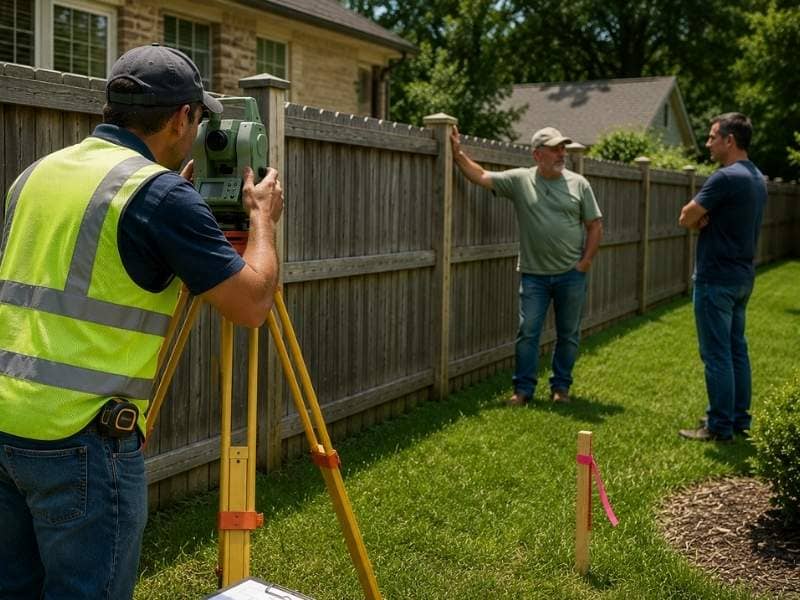
Most people assume a fence marks the edge of a property. It looks permanent, it’s been there for years, and nobody has complained. But a fence is not a legal document. A boundary survey is. And when the two don’t match, things get complicated fast.
Boundary disputes tied to fences are more common than most homeowners expect. The American Land Title Association estimates that roughly 40% of residential properties have some form of boundary discrepancy when formally surveyed. Many of those discrepancies involve fences placed a few feet off the actual property line, sometimes by the current owner, sometimes by someone who built the fence decades ago.
A Fence Is Not Always on the Property Line
A fence gets built based on what someone believed the property line to be, not necessarily where it legally is. That belief might have come from a handshake agreement with a neighbor, an estimate based on visual landmarks, or a guess based on where a previous fence once stood.
None of those methods are accurate. Legal property boundaries are defined by recorded deeds, plats, and survey data, not by where a wooden post was driven into the ground. Over time, original survey markers get buried, removed, or disturbed. Trees grow and change the look of a yard. Old fences get replaced without anyone checking the original records first.
The result is a fence that may sit several inches or several feet away from the true boundary. In most cases, nobody notices until something forces the issue.
Simple Signs There Could Be a Boundary Problem
A boundary problem doesn’t always announce itself clearly. Sometimes it surfaces slowly, through small things that don’t seem connected at first.
A neighbor suddenly asking where the property line is can be an early sign. So is discovering that your property tax records show different dimensions than what you assumed. If a neighbor mentions they’re planning to build their own fence, and their planned location doesn’t match yours, that’s worth paying attention to.
Physical signs matter too. If there are survey pins or iron markers in the yard that don’t line up with the fence, that gap is telling you something. A fence that cuts across a natural slope at an odd angle, or one that clearly doesn’t follow the same line as neighboring fences on the block, may also be off.
Planning a renovation, selling a home, or dealing with a title company during refinancing can all bring boundary questions to the surface. These situations often trigger a formal review of property records, and that’s when discrepancies tend to get discovered.
How a Boundary Survey Finds the Right Line
A boundary survey is a professional process that locates the legal property line based on recorded documents and precise field measurements. A licensed surveyor reviews the deed, title history, and any existing plat maps for the property. They then go to the site and take measurements using professional-grade equipment.
The surveyor looks for existing monuments, which are physical markers placed during previous surveys. Where original markers are missing, they calculate the correct position using recorded distances and angles from the deed. Once the boundary is confirmed, they place new markers at the corners and produce a written survey report.
That report becomes a legal record. It shows exactly where the property line sits relative to any existing structures, including the fence. If the fence is two feet inside the neighbor’s property, the survey will show that clearly, with measurements and documentation to back it up.
A boundary survey typically costs between $500 and $1,500 for a standard residential lot, depending on the size of the property and the complexity of the records involved.
What to Do If the Fence Is in the Wrong Place
Finding out a fence crosses a property line is uncomfortable, but it doesn’t have to become a conflict. How the situation gets handled matters as much as the finding itself.
Start by reviewing the survey report carefully. Understand exactly where the discrepancy is and by how much. Then have a calm, factual conversation with the neighbor. Share the survey results and give them time to review the information. Most neighbors don’t want a legal dispute any more than you do.
In many cases, both parties agree on a practical fix, whether that’s adjusting the fence, documenting an agreement about the existing location, or simply acknowledging the difference without moving anything. Some states recognize a legal concept called “adverse possession,” where a fence in the wrong location for a long enough period can shift property rights in certain circumstances. An attorney familiar with property law can explain how local rules apply to a specific situation.
If the neighbor disputes the survey results, they have the right to commission their own survey. Two surveys that disagree can be reviewed by a third surveyor or resolved through mediation. Legal action is an option but usually a last resort after other approaches have been tried.
Check the Property Line Before Building a Fence
The easiest way to avoid a boundary problem is to confirm the property line before a fence goes up, not after. A boundary survey done at the planning stage costs the same as one done after a dispute starts, but it avoids the stress, potential legal costs, and the expense of moving a fence that’s already been installed.
Many fence contractors do not verify property lines before starting a job. That responsibility falls on the property owner. Local permit offices sometimes require a survey before approving a fence permit, but not always. Even when it’s not required, getting one is worth it.
A survey done before construction also protects against future claims. If a neighbor later questions the fence location, the documented survey is a clear record that the fence was placed correctly from the start.
Frequently Asked Questions
What is a boundary survey?
A boundary survey is a professional measurement of a property’s legal edges. A licensed surveyor uses recorded deeds, plat maps, and field measurements to locate the exact property line and places physical markers at the corners. The results are documented in a formal survey report that serves as a legal record.
Why doesn’t every fence match the property line?
Fences are often built based on estimates, old agreements between neighbors, or the location of a previous fence that was never formally verified. Without a survey, there’s no reliable way to know where the legal line sits. Over time, survey markers get buried or removed, and the true boundary becomes easy to miscalculate.
What happens if my fence is on my neighbor’s property?
The first step is understanding the survey results clearly. Then a direct, calm conversation with the neighbor is usually the right move. Many situations resolve through a mutual agreement to adjust or leave the fence where it is with written documentation. In more complicated cases, a real estate attorney can help determine the right path forward based on local property laws.
Can a boundary survey help solve a fence dispute?
Yes. A boundary survey provides documented, measurable evidence of where the property line legally sits. That documentation takes the guesswork out of a dispute and gives both parties a factual starting point. It doesn’t guarantee an easy resolution, but it replaces assumption with verified information.
When should I get a boundary survey?
Before building a fence is the most practical time. A survey is also worth getting when buying a property, when a neighbor questions the location of an existing fence, during a renovation that involves the property edge, or any time there’s uncertainty about where the legal boundary sits.