
Why Home Elevation Projects Need an As-Built Survey Before the Next Inspection
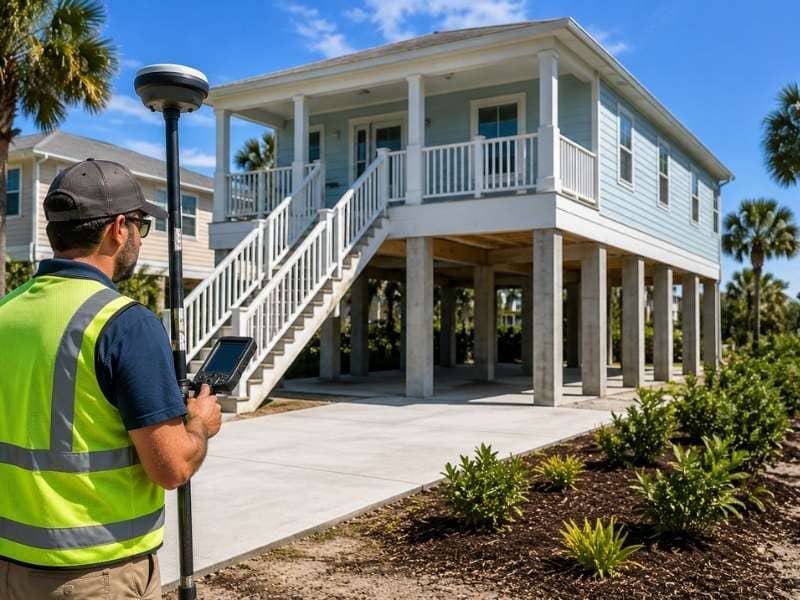
Once a contractor finishes raising a home, most homeowners think the hard part is over. The house is up. The work is done. But there’s still one important step before the next inspection, and skipping it can cause real problems. As built surveys give inspectors the verified data they need to confirm the finished work. Without one, the inspection process stalls.
Why an As-Built Survey Matters After Raising a Home
An as-built survey shows the real, final state of a home after construction ends. It records the actual floor height, the exact position of the house on the lot, and every detail of the finished work.
Before a home gets raised, the approved plans describe what should happen. After the work is done, those same plans can’t confirm whether it did. That’s the gap an as-built survey fills.
Inspectors use it to check that the finished structure matches the permit. Without current measurements, they’re working from old paperwork that no longer reflects the building in front of them. That creates delays and sometimes a failed inspection.
How Updated Measurements Help During Inspections
Inspectors need current data. The original permit drawings are a starting point, not a final answer.
During elevation projects, things change on the ground. A contractor might adjust the stair layout to meet code. The foundation depth might shift based on soil conditions. Small decisions during construction add up, and none of them show up in the original plans.
An as-built survey records those changes. It gives inspectors real measurements instead of guesses. When inspectors have a complete, accurate record in hand, the review moves faster. There are fewer questions and a cleaner path to approval.
Inspectors pay close attention to exact floor height measurements because flood zone rules depend on them. Getting those numbers right the first time matters a lot.
What Changes an As-Built Survey Can Find
Surveyors don’t just confirm a home got raised. They measure every detail of the finished structure.
That includes the lowest finished floor height, the height of any enclosed spaces below the main floor, the location of stairs and landings, and the position of the foundation. If any of those features changed during construction, the survey records it accurately.
This matters for one clear reason. If a floor came in two inches lower than the permit required, an inspector will catch it. Finding that out during the survey, before the inspection, gives the homeowner time to respond. Finding it out during the inspection, without any supporting paperwork, puts the homeowner in a much harder spot.
Why Accurate Records Help in the Future
A completed as-built survey doesn’t stop being useful after the inspection.
The next time a permit gets pulled on the property, the permit office will ask for documentation of what’s already there. An as-built survey answers that question with records that carry real weight.
Insurance companies also rely on accurate elevation data. If a homeowner needs to update a flood insurance policy after the elevation project, the survey provides the verified floor height the insurer needs.
Property sales bring the same need. Buyers and their lenders want proof that the home was raised correctly. An as-built survey is the simplest way to provide that proof without delays at closing.
When to Schedule the Survey
Schedule the as-built survey right after the contractor finishes the elevation work, before booking any inspection.
This order matters. Surveyors need time to take field measurements, prepare the drawings, and deliver the final document. If a homeowner books the inspection first and then calls the surveyor, there may not be enough time before the inspection date.
Scheduling the survey first also gives the homeowner a chance to review the results. If something looks off, there’s still time to fix it. Once the inspection is on the calendar, that window closes fast.
The rule is simple: elevation work finishes first, survey gets scheduled right away, inspection gets booked after the survey is done.
Frequently Asked Questions
What is an as-built survey?
It documents the actual location and height of a structure after construction is complete. It shows what got built, not what the plans originally described.
Why is it needed after raising a home?
Inspectors verify finished work against current measurements, not original plans. An as-built survey provides those measurements so the inspection can move forward.
When should it be scheduled?
Right after the elevation work finishes, before booking the inspection. This gives time to review results and fix anything before the inspector arrives.
What changes does it record?
Floor heights, foundation positions, stair layouts, and enclosure heights. Any change from the original plans gets recorded accurately.
How does it help with future permits, insurance, and sales?
It creates a verified record that permit offices, insurance companies, and buyers can rely on, reducing delays in future transactions.