
When a Commercial Property Surveyor Finds Loading Areas Crossing Parcel Lines
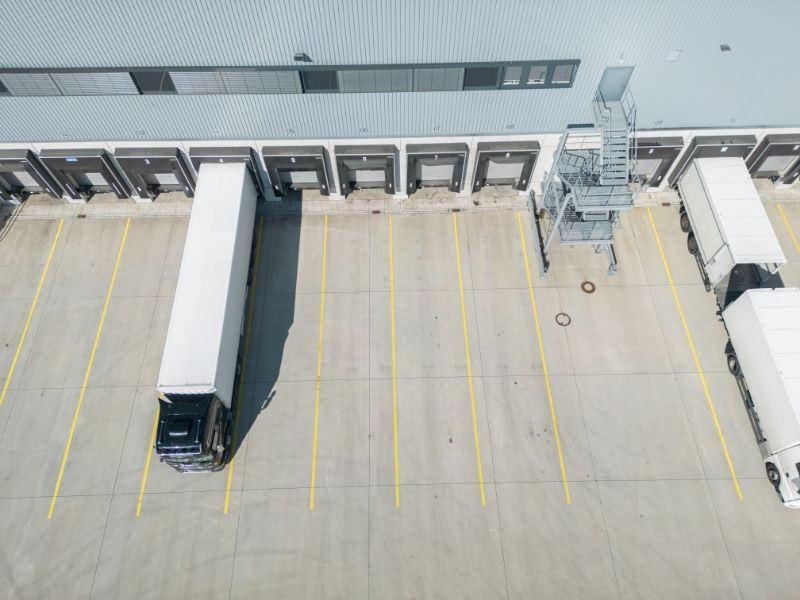
You are set to close on a warehouse. The numbers work, the building looks solid, and the loading docks handle steady truck traffic. Then the survey lands on your desk with a red flag: the truck court runs past your parcel and onto the property next door. A commercial property surveyor catches these boundary crossings before they become your problem. Find one after closing, and you may own a building with a loading area you have no clear right to use.
Why Loading Areas Can Extend Across Parcel Boundaries
Loading zones sprawl for practical reasons. Trucks need room to swing, back up, and turn around, and that space often got laid out long before anyone checked a lot line. An older site may have been striped and paved to fit the trucks, not the survey. The result is pavement and docks that wander over the boundary.
Phased development is a frequent cause. A company builds on one parcel, grows, then adds a dock or a truck court that spills onto an adjacent lot it also owned at the time. On paper the two parcels stayed separate. On the ground they worked as one big site.
Ownership changes muddy the picture further. A single owner might split a site and sell half, leaving a loading area straddling the new line. Shared-use deals between neighbors can do the same, especially when the handshake outlives the paperwork. Years later, a buyer inherits a layout that ignores the legal boundaries entirely.
How a Commercial Property Surveyor Identifies the Encroachment
A commercial property surveyor works from evidence, not assumptions. For commercial transactions, an ALTA/NSPS Land Title Survey can provide a more detailed review of property boundaries, recorded easements, improvements, and other conditions affecting ownership. They start with the recorded legal description and the plat for each parcel. Then they go to the field and measure where the boundary actually falls. When the paved loading area sits past that line, the crossing shows up in the data.
The field work locates the real corners and marks the true parcel lines. The surveyor ties the pavement, the dock, and the truck court to those lines. That comparison reveals how far the loading area extends and exactly where it leaves your parcel. Guesswork gets replaced with measured distances.
What the surveyor pulls together
To confirm a crossing, a commercial property surveyor usually reviews:
- The legal description and recorded plat for each parcel
- Corner evidence and monuments found in the field
- Measured locations of docks, pavement, and truck courts
- Recorded easements that may cover the shared area
- Prior surveys and any existing site plans
Laid side by side, these sources tell a clear story. They show whether the loading area is a true encroachment or a use already backed by a recorded right. That distinction shapes everything that follows.
Easements and Access Rights That May Affect the Finding
A crossing is not always a problem. Sometimes the loading area sits on land the property already has a legal right to use. A recorded access easement, an ingress-egress easement, or a shared-use agreement can support pavement that runs past the deeded line. These situations are common with shared loading and delivery areas, where neighboring properties may rely on documented rights to maintain truck access, parking, or circulation routes.
Those easements come in different flavors, and the details matter. An easement might allow trucks to pass but say nothing about parking a trailer there overnight. A parking easement may cover a set number of spaces, not an entire truck court. Reading the exact terms tells you what the loading area is actually allowed to do.
The gap to watch for is a use with no recorded backing. If trucks have crossed onto the neighbor’s parcel for years with nothing in writing, that is a weak position. Long use does not equal a legal right, and a new owner next door can challenge it. A survey plus a title review shows whether you hold a real easement or just a habit.
Why Parcel-Line Conflicts Matter in Commercial Transactions
A loading area over the line can stall a deal fast. Lenders and title companies do not like encroachments they cannot explain. During an acquisition or a refinance, the finding can trigger extra review, a title exception, or a demand to fix the condition before money moves. Deals slow down while everyone sorts out who owns what.
Operations take a hit too. If your trucks depend on that crossing and the right is not secured, the neighbor could block it later. A fence, a gate, or a new building next door could cut off the space your docks need. That risk hangs over how you run the site every day.
Future plans feel it most. Redevelopment, an expansion, or new construction all need a clean boundary picture to move forward. A crossing that sits unresolved can force a redesign or shrink what you can build. Buyers who skip the survey often learn this the expensive way, well after the ink is dry.
What Happens After a Commercial Property Surveyor Reports the Issue
The report is the start of the fix, not the end of the deal. First, match the survey against the title work. The goal is to learn whether a recorded easement already covers the crossing or whether the loading area sits on the neighbor’s land with no right attached. That answer sets your path.
From there, a few common steps follow depending on what the title shows:
- Confirm any existing easement terms and how far they actually reach
- Bring in legal counsel to review rights and options
- Negotiate a new easement or a boundary adjustment with the neighbor
- Revise site or redevelopment plans to stay within secured ground
- Address the condition as a closing item, with terms in the contract
Timing is your friend here. A crossing caught before closing gives you room to negotiate, price the risk, or walk away. The same issue found after you own the property leaves you with far less power. Have a commercial property surveyor check the parcel lines early, and you deal with a loading-area crossing on your terms instead of the neighbor’s.